
While everyone’s journey is different, bariatric surgery uses a specific medical standard to estimate outcomes: your “excess weight.”
Understanding how to calculate your own excess weight can help you better interpret the percentages surgeons talk about and set realistic expectations for your results.
What Does “Excess Weight” Mean in Bariatric Surgery?
In bariatric medicine, success is usually measured by the percent of excess weight lost (EWL) rather than total pounds alone.
Step 1: Determine Your Ideal Body Weight
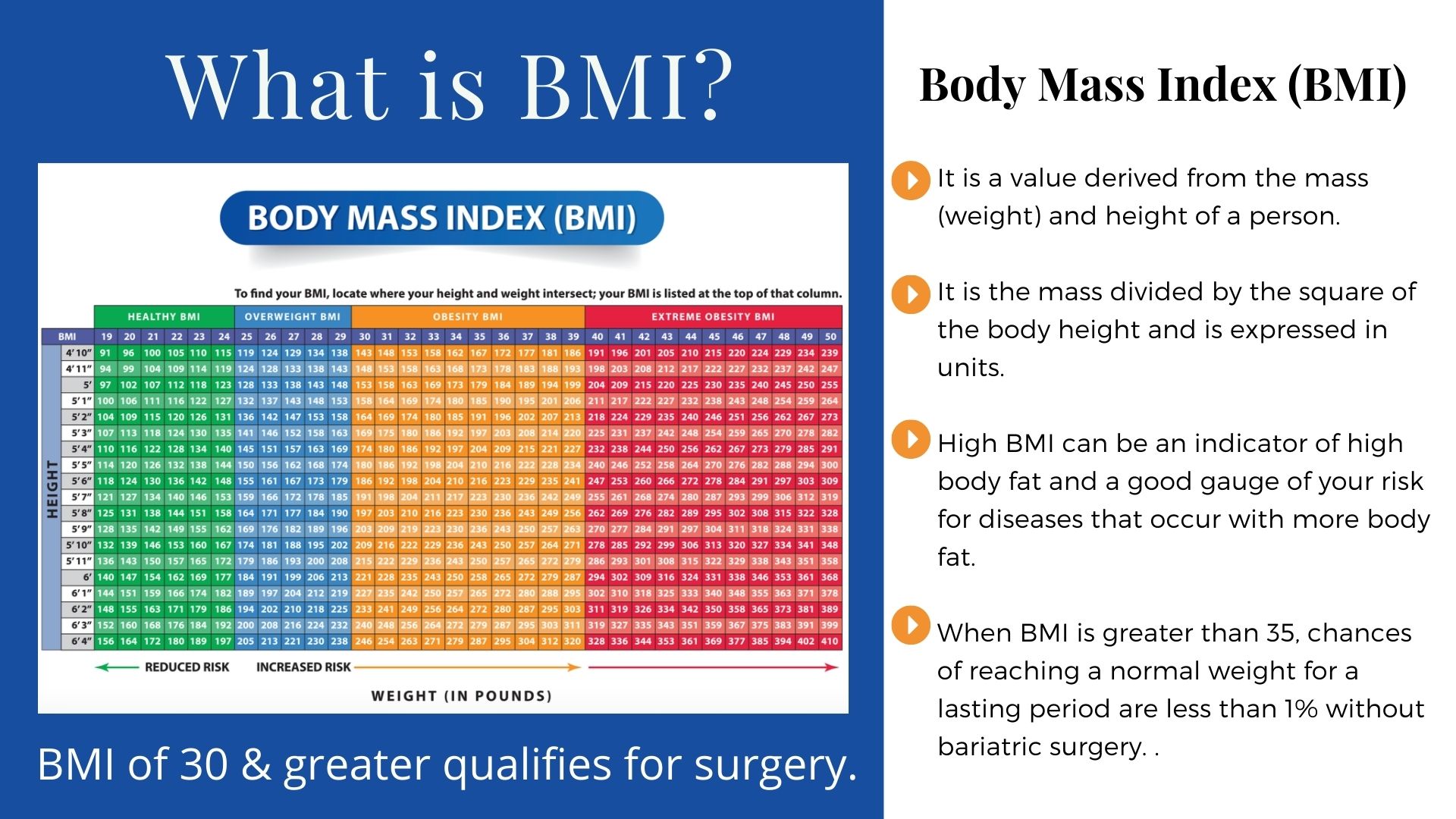
Most bariatric programs use the weight associated with a BMI of 25 as a medical reference point. This isn’t about perfection—it’s simply a standardized benchmark.
The “ideal body weight” you’ll use to calculate excess weight should be your weight at a BMI of 25. Unsure what that weight would be for you? Confirm your “ideal body weight” here.
Step 2: Calculate Excess Weight
Your “excess weight” = [Your current weight] - [Your ideal body weight]
Example:
Current weight: 300 lbs
Ideal weight: 175 lbs
Excess weight: 125 lbs
That 125 pounds is the number surgeons use when estimating outcomes after procedures like the gastric sleeve, gastric bypass, SADI-s surgery or duodenal switch surgery.
How Excess Weight Translates to Expected Weight Loss
When you hear statements like “60–70% excess weight loss,” here’s what that means in real numbers.
Using the example above (125 lbs excess weight):
60% EWL → ~75 lbs lost
70% EWL → ~88 lbs lost
80% EWL → ~100 lbs lost
This explains why results vary so much between patients, even when starting weights look similar.
Expected Weight Loss by Procedure (our averages)
For an overview of all weight loss surgery options offered at Texas Center, visit the Bariatric Surgery Overview.
Gastric Sleeve (VSG): Most patients lose 60–70% of excess weight within 12–18 months. Using our example of a patient with 125 lbs of excess weight, they can expect a 75-88 lbs loss.
Gastric sleeve is the most commonly performed bariatric surgery in this practice, and across Texas, and is often chosen for:
Significant appetite reduction
Steady, predictable weight loss
A simpler operation without an intestinal bypass
Sleeve is frequently recommended for patients without severe reflux or complex metabolic conditions.
Gastric Bypass (Roux-en-Y): Most patients lose 70–80% of excess weight, often faster than the sleeve. Using our example of a patient with 125 lbs of excess weight, they can expect an 88-100 lbs loss.
Gastric bypass is commonly recommended for patients with:
Long-standing type 2 diabetes
Significant acid reflux (GERD)
Higher starting BMI
Because bypass affects both intake and nutrient absorption, early weight loss tends to be more rapid.
SADI Surgery (Single Anastomosis Duodeno-Ileal Bypass): SADI is a more powerful metabolic procedure that combines a sleeve gastrectomy with intestinal bypass. It is typically recommended for patients who need maximum weight loss or metabolic improvement. Most patients lose 80–90% of excess weight over 18–24 months. Using our example of a patient with 125 lbs of excess weight, they can expect a 100-113 lbs loss.
SADI is often considered for:
Patients with very high BMIs
Severe or difficult-to-control diabetes
Patients at higher risk for long-term weight regain
Because SADI involves greater malabsorption, it requires strict vitamin adherence and long-term follow-up, which is why careful patient selection is essential.
Typical Weight Loss Timeline for Texas Center Patients
While excess weight loss is the most accurate long-term measure, many patients also want to understand what the first year typically looks like. And while we cannot emphasize enough that every patient is different (meaning “success” looks different for everyone), we understand the desire to see a generalized timeline of weight loss expectations.
With that in mind, below is a rough overview of the average weight lost among bariatric surgery patients in the first year:
|
Procedure |
1 Month |
3 Months |
6 Months |
12 Months |
|
Sleeve |
15–25 lbs |
30–40 lbs |
50–70 lbs |
60–70% EWL |
|
Bypass |
20–30 lbs |
45–60 lbs |
70–90 lbs |
70–80% EWL |
|
SADI |
25–35 lbs |
55–70 lbs |
85–110 lbs |
80–90% EWL |
For a deeper month-by-month breakdown, check out the blog post, “Weight Loss Timeline After Bariatric Surgery: What You Can Expect.”
Why Results at Texas Center are So Strong:
Patients of Texas Center surgeries often see excellent outcomes thanks to:
Skilled, specialized, and board-certified surgeons, Dr. Joe Cribbins & Dr. Ed Chen
Consistent follow-up and long-term monitoring
Structured bariatric nutrition programs
Multiple convenient clinic locations (for improved patient engagement)
Want to see real results? Check out Texas Center’s patient transformations on our website photo gallery or on our Instagram page.
Frequently Asked Questions
How do I calculate my own excess weight?
Your care team will calculate this for you, but it’s your current weight minus your ideal weight (BMI 25).
Which surgery leads to the most weight loss?
SADI typically results in the highest excess weight loss, followed by gastric bypass, then sleeve. The right surgery depends on your health profile.
Will I lose all of my excess weight?
Most patients lose 60–80% of excess weight, which is enough to dramatically improve health and quality of life.
How do I know which surgery is right for me?
That decision is made with your surgeon based on BMI, reflux, diabetes, other comorbid conditions, lifestyle, and long-term goals.
How do I get started?
You can request a consultation here or call us at (214) 501-1333.
Our highly skilled and experienced board-certified surgeons specialize in ultra-minimally invasive general and bariatric surgery. They are affiliated with a number of national associations, including the:
To request a consultation, contact us online or call (214) 501-1333 today.
Locations
We have 4 locations