Rapid weight loss is one of the most powerful benefits of bariatric surgery—but it also increases the risk of gallstone formation. Many patients ask what happens if the gallbladder becomes an issue after weight-loss surgery and whether it should be removed preventively. Here’s what you need to know.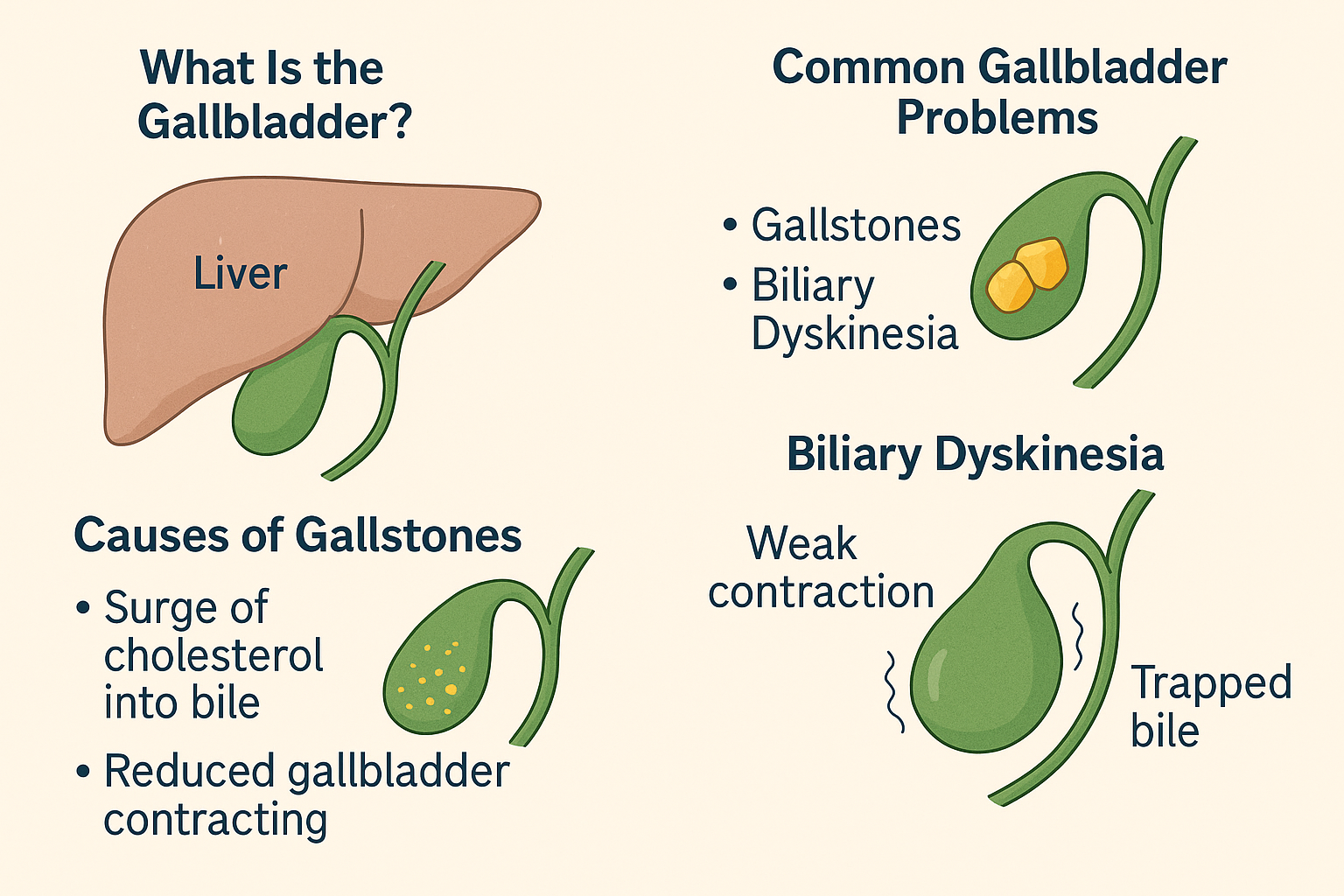
If gallbladder disease develops after bariatric surgery, the most effective and definitive treatment is surgical removal of the gallbladder, also known as a cholecystectomy.
Unlike kidney stones, gallstones cannot be dissolved or broken up with lithotripsy. Once symptoms occur, medical therapy is not successful, and surgery becomes the recommended treatment.
Untreated gallbladder disease can lead to significant and painful complications, including:
Severe abdominal pain
Nausea or vomiting
Infection of the gallbladder or liver
Pancreatitis (the most serious complication)
The longer inflammation continues, the more scarring develops—making surgery more difficult and recovery slower. Early treatment prevents these risks.
For most bariatric patients, a cholecystectomy is a straightforward outpatient procedure. Patients typically go home the same day.
At Texas Center for Bariatrics and Advanced Surgery, we use ultra–minimally invasive techniques with the da Vinci robotic surgical platform. This allows us to often:
Use the same small incisions from previous bariatric surgery
Reduce post-operative pain
Shorten recovery time
Improve surgical precision and outcomes
During surgery, the gallbladder is separated from the liver, the cystic duct is sealed and divided, and the gallbladder is removed through a tiny incision.
Most patients recover quickly and return to normal activities shortly after surgery. Tips for healing include:
Avoiding fatty or heavy foods for 1–2 weeks
Limiting strenuous activity and heavy lifting briefly
Returning to work when comfortable, often within days
The majority of patients transition smoothly because the body adapts well to digesting fats without a gallbladder.
Some patients ask if their gallbladder should be removed at the same time as bariatric surgery to prevent issues later.
A preventive (prophylactic) cholecystectomy is only recommended if there is:
A history of gallbladder disease
Evidence of symptomatic gallstones prior to surgery
If the gallbladder is healthy and asymptomatic, removing it unnecessarily increases surgical risk and recovery time without benefit.
The best proven strategy to prevent gallstones after weight-loss surgery is Ursodiol, a medication that reduces gallstone formation.
We typically prescribe the brand Reltone.
It is taken for the first six months after bariatric surgery.
It reduces the risk of gallstones by 60–70%.
Without prevention, up to 40% of bariatric patients may develop gallstones within months. With Ursodiol, that number drops to about 2%.
Ursodiol helps protect the gallbladder by:
Lowering cholesterol in the bile
Increasing bile flow and cholesterol solubility
Improving gallbladder motility
This combination prevents the conditions that allow gallstones to form.
The medication has been used safely since the 1980s and is very well tolerated. Mild GI upset can occur, but most patients have no side effects.
Gallbladder issues can be a common side effect of rapid weight loss after bariatric surgery, but the good news is, they are preventable and treatable.
Ursodiol significantly lowers the risk of gallstones.
Robotic-assisted cholecystectomy is safe, routine, and effective when needed.
Proactive monitoring ensures early intervention and better outcomes.
Our highly skilled and experienced board-certified surgeons specialize in ultra-minimally invasive general and bariatric surgery. They are affiliated with a number of national associations, including the:
To request a consultation, contact us online or call (214) 501-1333 today.
Locations
We have 4 locations